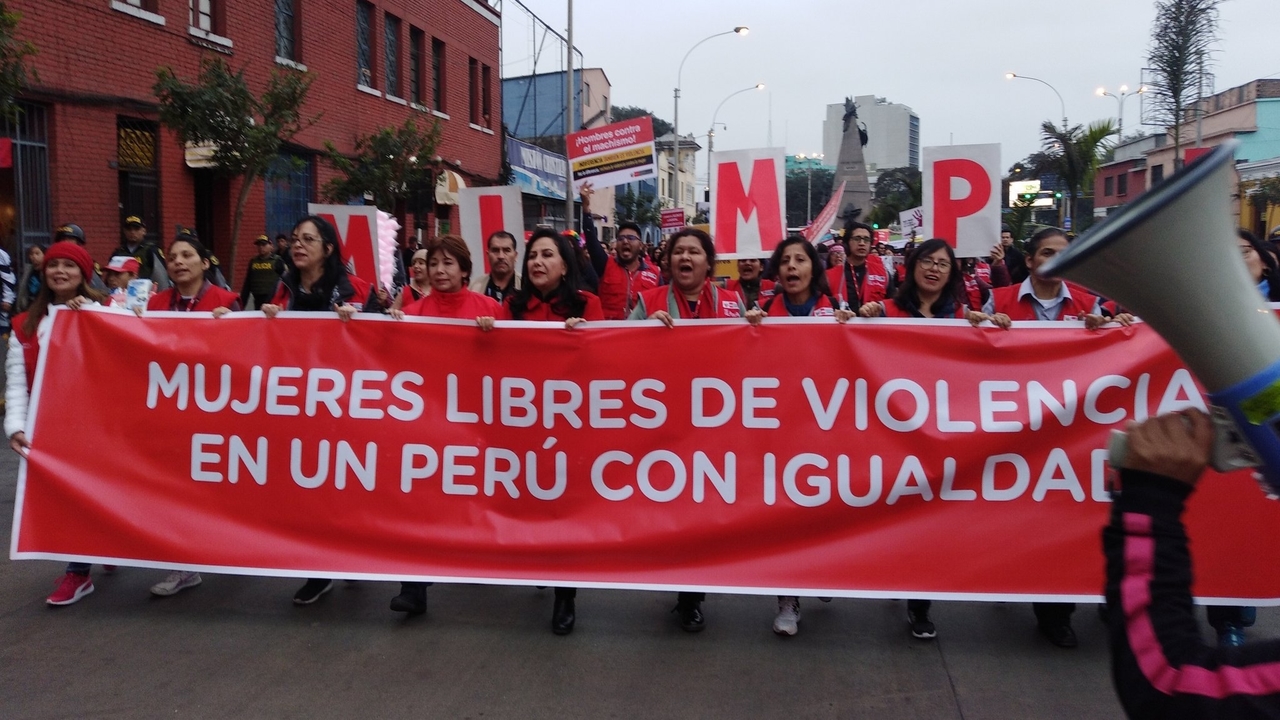
Peru - a country between shifting generations
Not only has the path towards feminism been long, but also has it been tough and we can say that we are still not there yet. The equality of women in society isn't embraced by every individual in the same way. Some might see the feminist movement as aggressive or unnecessary, others don't take it seriously at all. We want to talk about the differences and origins of feminism as a political movement, look at its history, all from the South-American perspective of Peru. The South American country and its relation to Feminism is for several reasons very interesting. Not only are we living through times of political, but also changes in values. Older, more conservative generations are being challenged by a younger, more idealistic culture, which is willing to fight for new values and goals. Looking at the growing gap of values, we ask ourselves why feminism still is a sensitive topic in Peruvian society? Where are the roots of feministic movements and how are they different, if we compare them to other cultures?
To demonstrate a clearer Idea of the problem of machoism structures, we want to take a look at the following:
Schools in Peru: From a socio-cultural point of view, we can conceive schools as exclusive spaces for boys. They are designed in such a way that the boys take over both the main courtyard and the main public spaces so that the students are forced to spend their free time in the classroom. We should not ignore such important details as these since the school is a formative and constructive stage for our Peruvian citizens. However, some private schools are beginning to change their school methodology, therefore female students can take advantage of public spaces just like men.
This is only one of many examples of how we are not only looking at an issue of different values but also or maybe even especially structural discrimination within the society against women. Following this way, we will have to look at the communication and understanding within the society to be able to judge if we are progressing or if we are maybe even harming society through feminist movements. Another important aspect will be the role of a woman in Peruvian society as she is not only expected to take care of the children and the household but nowadays also has to have a paying job to support her family. This means that her workload has doubled but the idea of her role is still seen as it was "enough" when only one family member (usually the husband) went to work.
It is indisputable that Peruvian women face a problematic situation. The gap between men and women in terms of poverty, unequal pay and illiteracy as well as the problem of domestic violence are enormous despite improvements in recent years (Morales, 2009). Although a similar trend can be observed in other countries around the world, the question is whether special factors exist in Peru that reinforce this situation or have even given rise to it.