Introduction

Peruvian Feminism Introduction

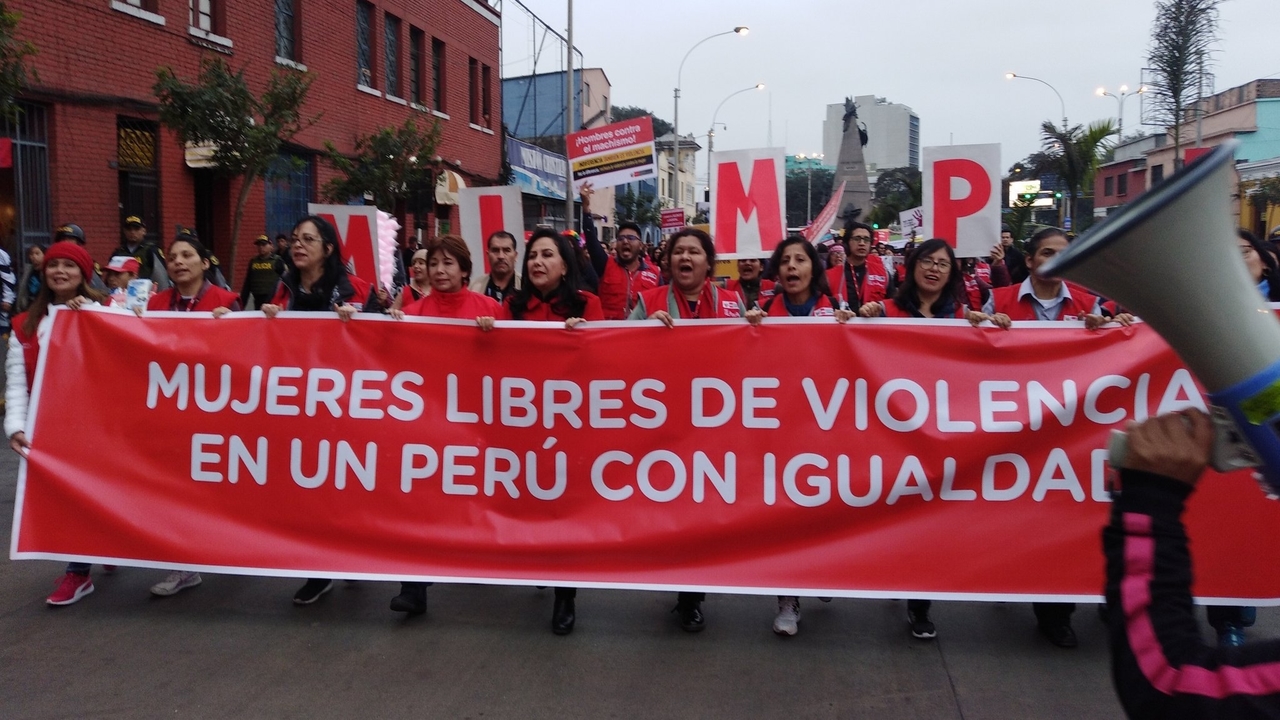
Peru - a country between shifting generations Not only has the path towards feminism been long, but also has it been tough and we can say th...

Sunday, November 21, 2021

Aspects of globalization in Peruvian feminism


Aspects of globalization in Peruvian feminism

For many decades, the world has witnessed the fast advances of technology, such as mobile phones, telephones, computers, the internet, and so on. These advances have helped to improve the growth of communication between people from different cultures and countries. Since then, we can get instant communication with anyone around the globe, research for data about any topic at any moment, or even exchange our cultures with anyone. This is when globalization comes around with technology by making us become interconnected with each other with social media.

On the other hand, this has helped many companies to increase their production, their international trade of goods, the companies can operate in more than one country, and with the result of helping the global economy with the use of the new technologies.

In terms of globalization, the feminist movement has been very influenced by this, since by bringing changes and innovations it changes objectives on which it will focus, which is changing the look of society around the political, social, cultural And economically, also one wants to adapt the movements in the new scenarios since with the new opportunities that arise and it is necessary to know how to face them and overcome them, and finally, alliances with the relevant authorities have been contemplated to support the ideas of the movements as recognition of women as subjects of law, recognition of diversity/inequality in the forms of existence and positions of women within feminisms, since this alienation also reflects a space for conversation so that it can be discussed civilly.

Globalization is part of people's lives, we are constantly in contact with the effects generated by globalization. People are changing positively, millennials and centennials are open-minded and when they are critical of something they try to justify their point of view. For this reason, feminism is more supported in these times, and labor and social differences are changing for be better, we are approaching a more socially productive and empathetic world. Bianco (2017) Young women’s commitment to feminism is strong and that, while the Internet has undoubtedly facilitated the spread of feminist ideas, college campuses, in particular, are critical to the longevity and continuation of the feminist movement.

In general, differences in employment opportunities (measured from levels of unemployment) were not found to be an important factor in determining expected incomes, except in the cases of Colombia and Brazil in 1998. In Colombia, women have had significantly higher levels of unemployment than men over the 20-year period analyzed; it was estimated that this has had a bearing on a growing component of expected wage differences of men and women. (Tenjo, 2004; Ribero, 2004; Bernat, 2004). Perhaps Peruvian feminism is not as powerful as in Chile, Argentina or Colombia. However, we are changing little by little, we are one of the countries with the highest economic growth in recent years, it is interesting to know that beyond our past (which is rich in culture) we are developing more academically, especially women, who historically They drove the development of the country, and to this day that continues to happen.

Monday, November 1, 2021

Multiculturalism in Peru


Peru: The Wealth of the People

Peru is a multicultural and multiethnic country, in turn, it is one of the most culturally diverse countries in America and the world. This variety comes from pre-Hispanic times, it has to do with the extension and geographical variety, with the baggage of those who have come at different times to share this soil with the original populations: Spaniards and Africans in the 16th century, Chinese and Japanese in the 19th century.

Cultural diversity is a fundamental component of human development, it promotes identity, innovation, and creativity.

Cultural diversity is recognized in our internal order for which it enjoys constitutional recognition. In recent years there are specific developments on very important issues such as native languages, collective rights, prior consultation, peoples in voluntary isolation and the mainstreaming of the intercultural approach in the management of the State.

Political Constitution of Peru 1993

Article 2:

Everyone has the right:

19. To his ethnic and cultural identity. The State recognizes and protects the ethnic and cultural plurality of the Nation. All Peruvians have the right to use their own language before any authority through an interpreter. Foreigners have this same right when they are cited by any authority.

Article 17:

The State guarantees the eradication of illiteracy. It also promotes bilingual and intercultural education, according to the characteristics of each area. Preserves the various cultural and linguistic manifestations of the country. It promotes national integration.

Article 89:

The Peasant and Native Communities have legal existence and are legal entities. They are autonomous in their organization, in communal work and in the use and free disposition of their lands, as well as in economic and administrative matters,within the framework established by law. The ownership of their lands is imprescriptible, except in the case of planned abandonment in the previous article. The State respects the cultural identity of the Peasant and Native Communities.

Undoubtedly, today there is a greater awareness of rights and the positive value of cultural diversity. However, this assessment still coexists with the persistence of discriminatory practices that prevent the full development of our daily life and citizen coexistence.

But we want to highlight something valuable and evident: The difference, the plurality of experiences, memories, ways of life, are valued more and more. Cities have grown to form new cultures where traditions are creatively combined of indigenous peoples, localities, towns, peasant communities, and urban and peri-urban neighborhoods. They are cultures that share with each other and remain open and in constant change, but that retain sources of pride and identity.

Peru is one of the most multicultural countries in the world due to the diversity of people here, among them are women who are great representatives of their own cultures, for example, in general terms, in culture. In the Andes, more than 30 million women are in charge of fundamental functions for the country's development, such as the fight against poverty, the promotion of family agriculture, the defense of the environment, and actions to mitigate and adapt to change. climate.

On the other hand, we also have representatives from the Amazon part of the country in which women are in charge of textile work where after ingesting ayahuasca they capture their art in the garments they wear, they are also the creators of ceramic-based works of art. where their connection with nature is represented, with these paragraphs I want to show how women are part of the multiculturalism of the country and are fundamental for it.


Women of the Andes


Far away from the capital of  Peru, on the highlands, traditions and culture are being kept up daily as part of their activities such as farming, agriculture, fishing, offerings, shamanism, and so on. 


Women have played a huge role in making progress within these communities. They use cooperative learning from the Quechua Indians, they follow their ancestor's traditions. For example, women consider weaving very important to their tradition. They can weave in groups while sitting, talking, or laughing. Weaving has been part of the Incas' history, they used it to communicate through the textiles in order to tell stories. These activities are part of their daily lives which have been learned through generations. That is when culture is brought up, following the tradition from many years of learning to their present days.

 Peru is one of the most multicultural countries in the world due to the diversity of people here,       among them are women who are great representatives of their own cultures, for example, in general terms, in culture. In the Andes, more than 30 million women are in charge of fundamental functions for the country's development, such as the fight against poverty, the promotion of family agriculture, the defense of the environment, and actions to mitigate and adapt to change. climate.


On the other hand, we also have representatives from the Amazon part of the country in which women are in charge of textile work where after ingesting ayahuasca they capture their art in the garments they wear, they are also the creators of ceramic-based works of art. where their connection with nature is represented, with these paragraphs I want to show how women are part of the multiculturalism of the country and are fundamental for it. 


Andes Values

Within our country some words can be offensive such as "serrano", "cholo" or "mestizo", Peruvians seem to have reached an agreement that being Andean or adapting these customs is a bad thing since supposedly if we are more similar to foreigners we will be better. It seems that we have forgotten the cultural richness that our country possesses and the values ​​established by our ancestors “the Incas”. 

In the peruvian andean culture, women have an impressive value, they have all kinds of knowledge in addition to having promoted equity in the pre-Hispanic and colonial times. Bearing this in mind, we should be proud that after a macho Spanish attack, plagued with rapes, robberies, looting, and deceptions, our values ​​have remained. This data is curious since a macho society like the Spanish one proposed us to worship a female divinity (Catholic virgins) despite committing acts of vandalism that go against many rules proposed by Catholicism, as shown in the video "Peru: People of the Andes, 1958” the Peruvian natives maintained their tradition through dances and other activities. From the Spanish perspective the use of religion was given to control the native colonies; However, the natives adapt this culture without losing their values ​​and respect for women. In the article "Testimonies of an Andean woman for the reconstruction of history" we can know that, in Ayacucho, the area where the terrorist violence originated, for example, a large part of the media "reacted against the Commission of the Truth, qualifying the bulk of its members as 'Lima', linked to NGOs 'that profit from the pain of the people' or 'pseudo-intellectuals' "(Zapata 2010: 19). 

As a conclusion to this topic, we ask ourselves if ... it is really necessary classify ethnic groups in our country? Since we are an indigenous and Andean country. The coast is close to the Andes mountain range through Nazca, so demographically the coast has Andean characteristics, even the jungle that is geographically far from the mountains has a mixture of ethnic groups due to the border countries where the jungle is more urbanized and foreign migrations from Europe who decide to apply their religion or lifestyle within the Peruvian jungle.  


Sunday, October 17, 2021

Dr. Jorge Rodriquez Gomez about abortion

 In the following, you will find a PDF Document with another perspective on the legal rights of abortion from Dr. Jorge Rodriquez Gomez


Source: https://drive.google.com/file/d/1lyv9yQfIwyWIU_zSu_PEe0Hom4s1EXb5/preview

Podcast episode Femism - Presentación, ideas y feminsimo By Jesse Alexis Orpineda Díaz


Source: https://www.listennotes.com/podcasts/1-presentaci%C3%B3n-ideas-y-feminsimo-jesse-lR7anbM2hd-/#embed

Rights of abortion in Peru

Many countries in the world are still in conflict about the legal abortion of an unborn child. Especially in the Latin American, strongly more conservative part of the world, we find a lot of loaded energy regarding the rights of the women body vs. the rights of the unborn child. 

The problem Peruvian women face is not only the society but the legal framework that controls their rights. 

Hard data: The current Law, which is anchored in the Peruvian criminal code, stated that if    a woman decides to get an abortion in Peru, she might be spending 2 to 4 years in a Peruvian prison. The code also includes the doctor, which would be fulfilling the procedure on the patient. (Privacy International, 2020)

If we compare this fact nowadays to other countries in Europe, then we can see that this wouldn't be imaginable for a lot of women. Especially the fact that we are all very connected and able to learn from each other progress via social media must make the situation for women in Peru very hard as they see how a society can and cannot accept certain rights and values of its citizens. Another factor that comes along with the Peruvian "rights" is the fact that rape victims are "lucky enough" to only spend three months of their lives in prison if they get to the police soon enough after the incident has happened to them and an investigation is made correctly. (Huff, 2007) All the fights for a change in the rights for at least women whose bodies have been abused and who have suffered and been traumatized through the act of rapists have been unsuccessful. This was seen once again as the parliament stated to protect the unborn child before the women six years ago. (Guardian, 2015)

It can be assumed that Peru is still a very religious country and we know that it is lead by rather conservative, older, men. Another factor is the missing education regarding contraceptional products. Many girls and boys might not be informed enough how or when to use them. It doesn't make it easier as a lot of topics are taboo and not usually talked about openly and freely.  

Although this was just a small insight into the problematics of being a woman in Peru, we can conclude that because of the complicated law structures women often take the risk to go to hidden clinics where the procedure is made is in bad circumstances and maybe even from doctors who are not fully able to operate on them. They might even take their lives at risk with those decisions.

Before getting it in our nation, we must think if Peruvians are responsible enough to face a possible legalization of abortion. That is to say, continue with contraceptive methods, respect people who do want to have children, among others. We believe that the new generations in Peru are mature enough to interact with a society where abortion is legal. We know that the most participatory for future positive changes in our country are young people, they are the ones who criticize the authorities the most and other aspects that may not benefit their family or themselves.

The hierarchy of the Catholic Church has always opposed the development of sexual and reproductive rights, pointing out that they constitute a moral relativism. Curiously nowadays, young people ignore "conservative attitudes" to live their life as they wish, take care of their diet, fight for their rights and make decisions with conscience. In addittion to this 8 out of 10 adolescents do not feel prepared for a full and responsible experience of their sexuality. This means that the dream of having a family or procreating is in the background for young Peruvians, they know the risks and that is why they decide to make this decision.

We can only hope that in the future more young women and also men see that by keeping this law alive, more complications, more fear and more pain is caused. By legalising abortion up to at least six weeks (where the unborn grows its heartbeat) the lives of women in Peru would be a lot easier and less stressful. The growing number of protests for legal abortion show that Peruvian women are strong and ready to fight till they gain the right over the bodies on a legal ground.


Important side fact that shouldn't be forgotten:

In Peru latent corruption isn't unknown and a lack of sexual education stemming from the fear of the conservative part of society. Peru was condemned to suffer from clandestine abortions, where not only 371,420 clandestine abortions are practised but also hospitalized for what at least 28 652 of which 414 women died from known cases. These data only reflect how important it is for today's society to bear with the topic of legal abortion.

Sources:

The Guardian (2015) Peru lawmakers reject bill to allow abortions for pregnant rape victims. Available at: https://www.theguardian.com/world/2015/may/27/peru-bill-to-abortions-pregnant-rape (Accessed: 17 October 2021).

Privacy International (2020) Country case-study: sexual and reproductive rights in Peru. Available at: https://privacyinternational.org/long-read/3791/country-case-study-sexual-and-reproductive-rights-peru (Accessed: 16 October 2021).

Huff, S. (2007), ‘Abortion Crisis in Peru: Finding a Woman ’s Right to Obtain Safe and Legal Abortions in the Convention on the Elimination of All Forms of Discrimination Against Women’, Boston College International and Comparative Law Review

RPP (2020), Generación del bicentenario: “es una narrativa política para comprender qué pasa en el país” https://www.youtube.com/watch?v=Jaq9IkGi0fA

Católicas por derecho a decidir (2015) Situación de la educación sexual integral en el Perú https://www.cddperu.org/es/informacion/hoja-informativa/situaci%C3%B3n-de-la-educaci%C3%B3n-sexual-integral-en-el-per%C3%BA

Taype-Rondan, A., & Merino-Garcia, N. (2016). Hospitalizaciones y muertes por aborto clandestino en Perú: ¿qué dicen los números? Revista peruna de medicina experimental y salud publica, 33.https://rpmesp.ins.gob.pe/rpmesp/article/view/2573/2600


Tuesday, September 21, 2021

Is our country a dangerous place for women?

Nowadays, Peru's misogynist culture and some citizens outdated ideologies have lead to our country not being the safest place for women. 

In Peru, women consist of more than the half of population. According to the statistics from INEI (The National Institute of Statistics and Information), there are about 16.641.100 women and 16.394.200 men. But why do most women still get their rights taken away nor fear facing a dangerous situation for them? 


In 2017 alone, the country has registered 94 feminicides, over 2,100 underage rape victims, and nearly 28.000 cases of male violence (Martinez, 2017).  However, there must be even more cases where victims remained silent for fear of being considered a liar or not having justice served for her. 


Let's take an example of one case that went widespread in 2020. A 21-year-old woman was gang-raped by 5 men. She went to meet some friends, at one moment she started to feel dopey and couldn't defend herself from the aggression. She reported her case and went to court expecting to get justice. One of the lawyers from her friends said "This girl is a person who likes social life".  Thousands of women and feminists were outraged by what was stated and posted on social media that just because they also like social life, that does not justify being raped or abused by men. Martinez, M. (2020)

Another case was from another 20-year-old woman who went to a bar with Espinoza Ramos in 2019. She told her family she was returning home, but she didn't. When she woke up at 6 am, she was next to his aggressor. She pushed him and ran away to her house to tell her mother what happened. They both went to report the case but in the end, the judges archived the case. Their excuse was her wearing red lace panties it meant she wanted to have sexual relations and those panties are used to have a better experience for intimate occasions.

In our country, victims have to deal with the trauma of the harassment for many years while their offenders just get a few months of prison and then are free or just never go to prison at all.

Let's not forget how a government, mostly with misogynist men, rules the country. A recent event that happened was our prime minister who verbally abused a congresswoman and made machoism posts on social media. In a matter of days after his allegations, he got recognized for his "work in favor" of Peruvian women. Ironic isn't it? 


Last year's pandemic has not been a safe situation for women who live in abusive households. According to groups formed by the Ministry of Women and Vulnerable Population, from March 17th to August 31st of 2020, there were reported around 14.583 cases reported of violence against women. 

Therefore, thousands of women will keep facing these situations if Peruvians won't change their way of thinking. Women have always feared things like going out alone at night, wearing a skirt, going to a bar and getting drugged, being catcalled on the streets, and so on. Because we never know if we will be the next victims. If something happens to us, people will call us liars or that it was our fault. We don't know If one day we won't get home safe or completely disappear. Things like that are the reason why Peru is such a scary and dangerous place for women.


Indignación en Perú: Jueces rechazan denuncia de violación porque la víctima usaba ropa interior roja. (2020, November 14) LA Times. Retrieved from: https://www.latimes.com/espanol/internacional/articulo/2020-11-14/indignacion-en-peru-jueces-rechazan-denuncia-de-violacion-porque-la-victima-usaba-ropa-interior-roja

En cinco meses de pandemia se denunciaron más de 14 mil casos de violencia contra la mujer (2020, September 22) Rpp Noticias. Retrieved from: https://rpp.pe/peru/actualidad/en-cinco-meses-de-pandemia-se-denunciaron-mas-de-14-mil-casos-de-violencia-contra-la-mujer-noticia-1294094?ref=rpp


Feminism in Peru - a perspective of generations


Feminism has provoked all kinds of discussions. The video below shows us how important the discussion about it actually is and that in the end, it is a positive movement, more than a negative movement. We can claim it as positive as its ideals are equality and rights for everyone.