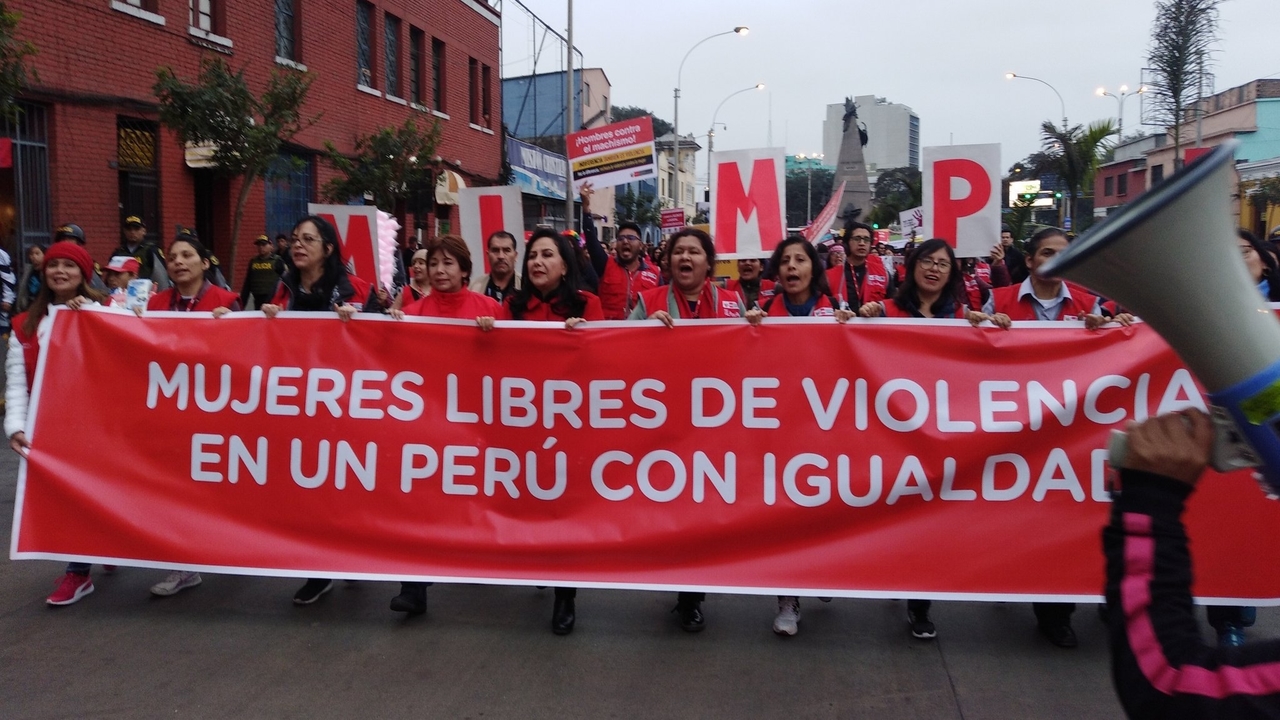
Many countries in the world are still in conflict about the legal abortion of an unborn child. Especially in the Latin American, strongly more conservative part of the world, we find a lot of loaded energy regarding the rights of the women body vs. the rights of the unborn child.
The problem Peruvian women face is not only the society but the legal framework that controls their rights.
Hard data: The current Law, which is anchored in the Peruvian criminal code, stated that if a woman decides to get an abortion in Peru, she might be spending 2 to 4 years in a Peruvian prison. The code also includes the doctor, which would be fulfilling the procedure on the patient. (Privacy International, 2020)
If we compare this fact nowadays to other countries in Europe, then we can see that this wouldn't be imaginable for a lot of women. Especially the fact that we are all very connected and able to learn from each other progress via social media must make the situation for women in Peru very hard as they see how a society can and cannot accept certain rights and values of its citizens. Another factor that comes along with the Peruvian "rights" is the fact that rape victims are "lucky enough" to only spend three months of their lives in prison if they get to the police soon enough after the incident has happened to them and an investigation is made correctly. (Huff, 2007) All the fights for a change in the rights for at least women whose bodies have been abused and who have suffered and been traumatized through the act of rapists have been unsuccessful. This was seen once again as the parliament stated to protect the unborn child before the women six years ago. (Guardian, 2015)
It can be assumed that Peru is still a very religious country and we know that it is lead by rather conservative, older, men. Another factor is the missing education regarding contraceptional products. Many girls and boys might not be informed enough how or when to use them. It doesn't make it easier as a lot of topics are taboo and not usually talked about openly and freely.
Although this was just a small insight into the problematics of being a woman in Peru, we can conclude that because of the complicated law structures women often take the risk to go to hidden clinics where the procedure is made is in bad circumstances and maybe even from doctors who are not fully able to operate on them. They might even take their lives at risk with those decisions.
Before getting it in our nation, we must think if Peruvians are responsible enough to face a possible legalization of abortion. That is to say, continue with contraceptive methods, respect people who do want to have children, among others. We believe that the new generations in Peru are mature enough to interact with a society where abortion is legal. We know that the most participatory for future positive changes in our country are young people, they are the ones who criticize the authorities the most and other aspects that may not benefit their family or themselves.
The hierarchy of the Catholic Church has always opposed the development of sexual and reproductive rights, pointing out that they constitute a moral relativism. Curiously nowadays, young people ignore "conservative attitudes" to live their life as they wish, take care of their diet, fight for their rights and make decisions with conscience. In addittion to this 8 out of 10 adolescents do not feel prepared for a full and responsible experience of their sexuality. This means that the dream of having a family or procreating is in the background for young Peruvians, they know the risks and that is why they decide to make this decision.
We can only hope that in the future more young women and also men see that by keeping this law alive, more complications, more fear and more pain is caused. By legalising abortion up to at least six weeks (where the unborn grows its heartbeat) the lives of women in Peru would be a lot easier and less stressful. The growing number of protests for legal abortion show that Peruvian women are strong and ready to fight till they gain the right over the bodies on a legal ground.
Important side fact that shouldn't be forgotten:
In Peru latent corruption isn't unknown and a lack of sexual education stemming from the fear of the conservative part of society. Peru was condemned to suffer from clandestine abortions, where not only 371,420 clandestine abortions are practised but also hospitalized for what at least 28 652 of which 414 women died from known cases. These data only reflect how important it is for today's society to bear with the topic of legal abortion.
Sources:
The Guardian (2015) Peru lawmakers reject bill to allow abortions for pregnant rape victims. Available at: https://www.theguardian.com/world/2015/may/27/peru-bill-to-abortions-pregnant-rape (Accessed: 17 October 2021).
Privacy International (2020) Country case-study: sexual and reproductive rights in Peru. Available at: https://privacyinternational.org/long-read/3791/country-case-study-sexual-and-reproductive-rights-peru (Accessed: 16 October 2021).
Huff, S. (2007), ‘Abortion Crisis in Peru: Finding a Woman ’s Right to Obtain Safe and Legal Abortions in the Convention on the Elimination of All Forms of Discrimination Against Women’, Boston College International and Comparative Law Review
RPP (2020), Generación del bicentenario: “es una narrativa política para comprender qué pasa en el país” https://www.youtube.com/watch?v=Jaq9IkGi0fA
Católicas por derecho a decidir (2015) Situación de la educación sexual integral en el Perú https://www.cddperu.org/es/informacion/hoja-informativa/situaci%C3%B3n-de-la-educaci%C3%B3n-sexual-integral-en-el-per%C3%BA
Taype-Rondan, A., & Merino-Garcia, N. (2016). Hospitalizaciones y muertes por aborto clandestino en Perú: ¿qué dicen los números? Revista peruna de medicina experimental y salud publica, 33.https://rpmesp.ins.gob.pe/rpmesp/article/view/2573/2600